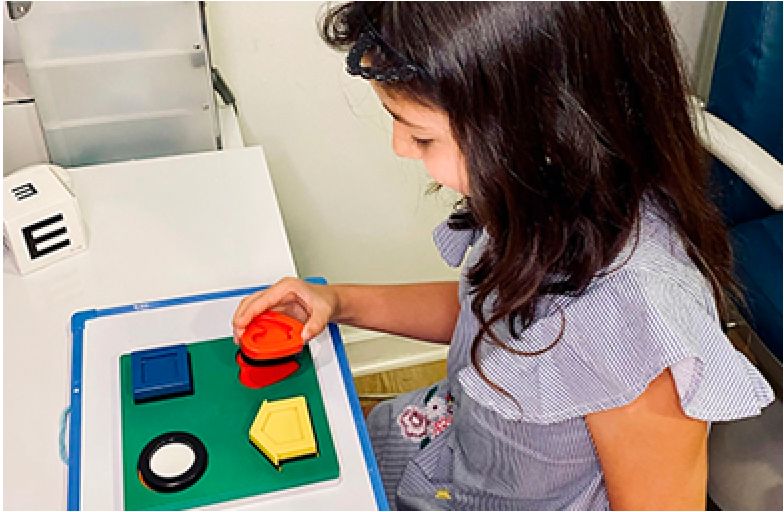
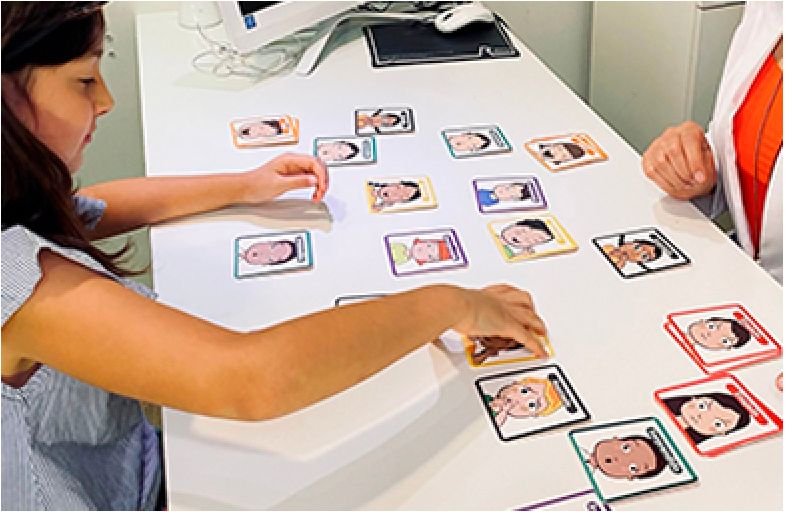
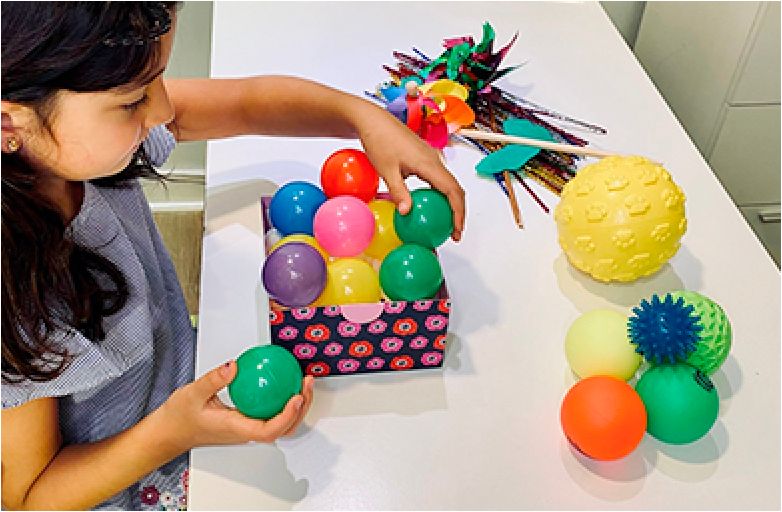
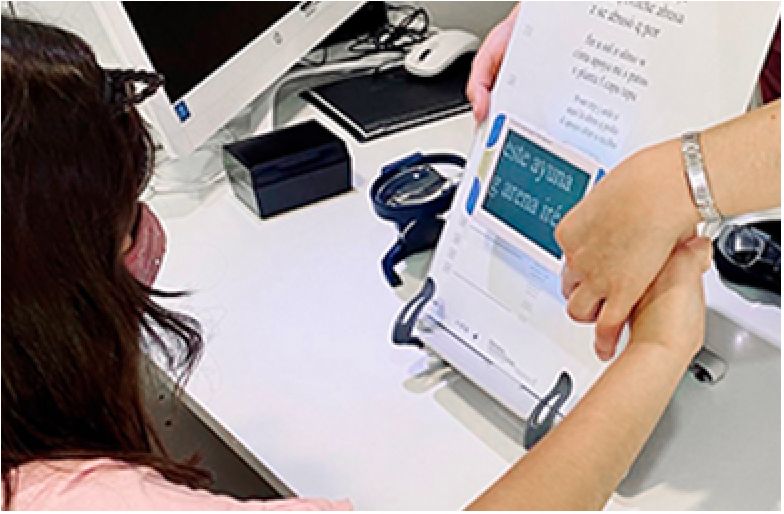
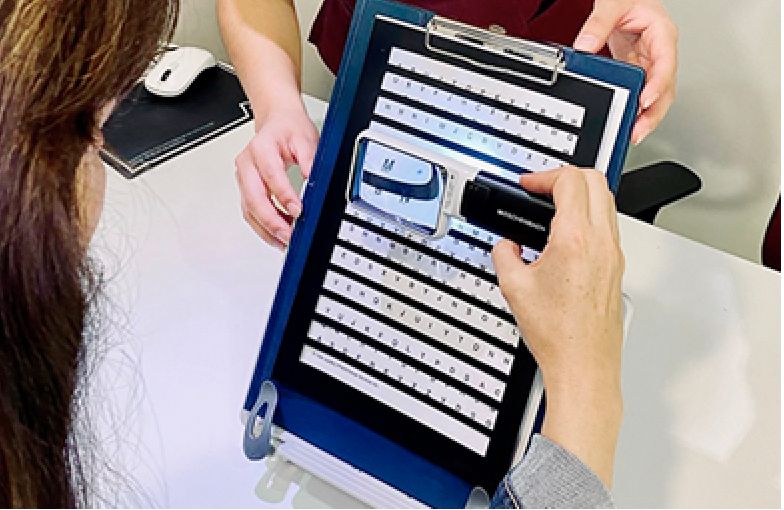
Rehabilitation of vision skills affected by diseases of the motor or sensory systems, in one or both eyes.
Loss of reading ability due to: stroke, diabetes, macular diseases, accidents, injuries, etc.
Strengthening and correcting problems of the visual system that affect proper focusing, and reduced vision due to lazy eye (amblyopia), strabismus or refractive errors.
Vision-related learning problems such as: poor reading comprehension, using a finger while reading, skipping or repeating lines while reading, excessive head movement while reading, holding reading material too close, blurred vision that does not improve with glasses, etc.
Therapeutic support for children and young people with neurodevelopmental disorders, such as autism spectrum disorder (ASD), who have eye conditions or who need stimulation to encourage eye contact.
Vision begins to develop with the stimulus of light, when the newborn opens their eyes, and it continues through the first years of life, just like the development of the brain. Vision is very important for a person’s psychological development (mirror neurons, empathy, theory of mind), psychomotor development (motor skills, coordination) and intellectual development. It is very important to check that the eye and the visual pathway are well formed and that the child reaches the expected visual skills for their age.
If the parents have a history of malformations or hereditary diseases, or the newborn has a genetic condition (for example, Down syndrome), the baby should be examined from birth. If your son or daughter was born prematurely, they have a higher risk of developing eye diseases and should be checked from birth.
Preschool and school age
It is estimated that about 80% of what we learn is directly related to vision. Children recognize images first, and then language develops. Good vision influences the development of reading, writing, crafts, sports, etc. The eye examination detects refractive errors (the need for glasses), strabismus (loss of binocular vision) and color vision problems, among others. If one or both parents or close family members have a history of wearing glasses full time, lazy eye (amblyopia), strabismus or another eye disease, the child should be examined as soon as possible.
A check of visual development in healthy children is recommended by age 4 at the latest. Strict eye check-ups are recommended in pre-kindergarten, first grade and sixth grade, and again when finishing school, and as indicated by the pediatrician or family doctor if the child has general conditions, for example allergic rhinoconjunctivitis, rheumatoid arthritis, diabetes, etc.
People with special needs
People with special needs, such as genetic conditions, after-effects of illness, or neurological or general diseases, can benefit from optical aids and/or rehabilitation therapies that help them perform better in their everyday and social activities. There are examination techniques and instruments that adapt to individual needs.
Young people and adults
The eye and the visual system finish their general development at about 9 years of age, but they keep changing throughout life. There may be optical changes during puberty that need to be detected. The environment and lifestyle habits can affect eye health, for example: allergies, too much close-up work or screen time, exposure to pollutants, sun, etc. In adulthood, a check-up every 1 to 2 years is suggested, depending on the state of your eye and general health. After age 40, the ability to focus up close (accommodation) gradually declines (presbyopia), so healthy people will usually need glasses for close-up work.
Older adults
Our eyes age, just like our skin, joints, etc. After age 50, a yearly check-up is very important to detect and treat conditions such as cataracts, glaucoma and macular diseases in good time. Refractive errors change over the course of life, so glasses should be checked at least once a year.