
+56 9 4653 0929+56 9 5400 9693Estoril 120, Las Condes

Myopia: prevention and control

Myopia in children: slowing its progression

We assess children and teenagers with myopia or at risk of progressing to high and potentially pathological myopia.

Our goal is not just to prescribe glasses. We aim to follow eye growth, identify early those at higher risk, and use diagnostic and therapeutic strategies to slow the progression of myopia and reduce its future complications.

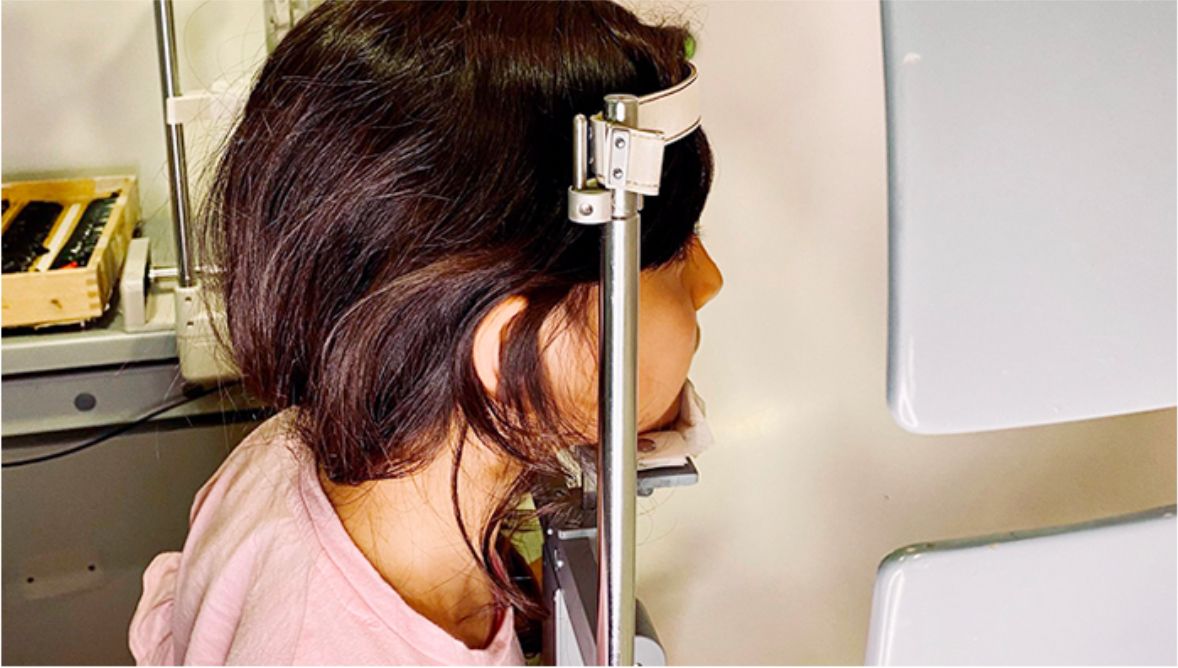
Girl having a visual field test

What it is

An eye that grows too long

With myopia (nearsightedness), distant objects look blurry.

In most children, myopia happens because the eye grows longer than expected. That length, called axial length, can be measured and followed over time.

If myopia progresses during childhood and adolescence it can become high (6 diopters or more, that is −6.00 D or more negative), which raises the risk of complications in adult life, such as retinal detachment, myopic maculopathy, glaucoma and earlier cataract.

Who should be assessed

Higher risk, earlier assessment

Spotting higher-risk children early lets us act sooner.

  • Children and teenagers with myopia.
  • Children whose parents are nearsighted.
  • Children who became nearsighted at a young age.
  • Children whose prescription or eye growth has increased recently.

Signs

What you may notice

Many children don’t complain: they adapt without realizing.

  • Squints to see far away.
  • Moves closer to screens, notebooks or the TV.
  • Has trouble seeing the board.
  • Headaches or tired eyes.

How we work

Measure, follow and decide case by case

An approach that combines objective measurements and regular follow-up.

  1. Objective measurement

    We measure the prescription and, when appropriate, the axial length of the eye.

  2. Risk factors

    We look at age, family history, habits and how fast myopia is progressing.

  3. Regular follow-up

    We monitor eye growth at intervals set according to each child’s risk.

  4. Individual plan

    Together with the family we choose the most suitable strategy to slow progression.

Strategies

What the evidence says

The treatment is decided after the assessment.

Spending more time outdoors helps prevent or delay the onset of myopia.

To slow its progression there are spectacle lenses and contact lenses designed for myopia control, and low-dose atropine eye drops.

Before your visit

What to bring

  • The glasses your child wears and any previous prescriptions or reports.
  • Any family history of myopia.
  • The assessment may need drops that dilate the pupil: near vision stays blurry for a few hours.

Preventive eye care and vision rehabilitation

Book an appointment (opens in a new tab)