+56 9 4653 0929+56 9 5400 9693Estoril 120, Las Condes

Areas of care

A comprehensive view of vision

From visual development in newborns to rehabilitation in older adults. Choose what you recognize; we will guide you to the right assessment.

Visual development from birth

Vision is built in the first months of life; early diagnosis can be decisive.

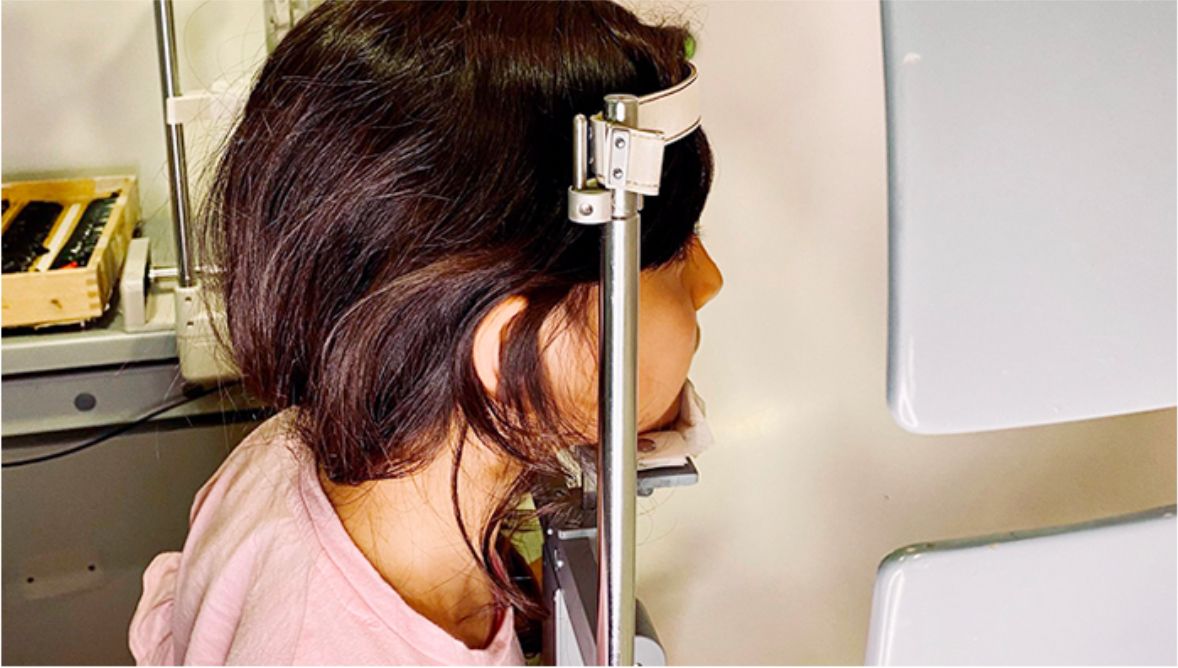
We assess newborns, premature babies and children with neurological or genetic risk factors or with developmental conditions.

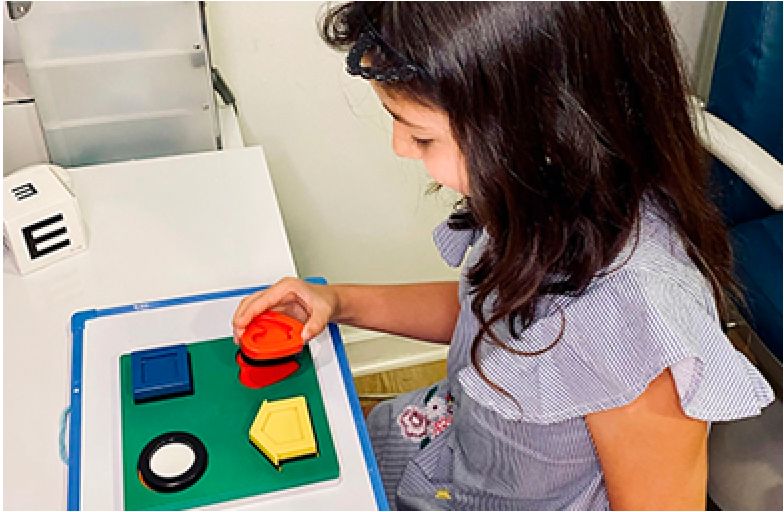
We look at how they fix their gaze, how they follow faces and objects and how they relate visually to their surroundings, with tests suited to their age.

When to see us

  • Does not fix their gaze or follow faces or objects in the first months.
  • Eye movements they cannot control, or one eye that turns.
  • Born prematurely, or with a neurological or genetic history.
Read more

Amblyopia

An eye that does not develop its full vision. Treatment should not be delayed.

Amblyopia, or “lazy eye”, happens when one eye does not develop its full visual ability during childhood, even though the eye is healthy.

Treatment works best while the visual system is still adaptable in childhood, so it should not be delayed.

When to see us

  • One eye sees less than the other, even if the child does not notice.
  • A turned eye, or a large difference in prescription between the eyes.
  • A drooping eyelid that covers the pupil.
Read more

Strabismus and binocular vision

Problems with how the eyes work together, in children and adults.

We assess childhood and adult strabismus and binocular vision: how the two eyes work together and what a problem means for everyday function.

This includes eye strain, convergence insufficiency and near-vision difficulties that affect reading, learning and precision tasks.

When to see us

  • An eye turns in, out, up or down, all the time or now and then.
  • Tilts or turns the head to look, or closes one eye.
  • Tired eyes, discomfort or blurred vision when reading.
Read more

Double vision and eye movements

Double vision (diplopia) and eye movement disorders.

Double vision can come from problems in the muscles or nerves that move the eyes, from neurological or systemic diseases, from an injury or from surgery.

We look for the cause, assess its impact on daily life and coordinate with neurology or other specialties when needed.

When to see us

  • Sees double with both eyes open, and the image becomes single when one eye is covered.
  • Double vision after surgery, a blow to the head or a neurological illness.
  • If double vision comes on suddenly, go to an emergency department right away.
Read more

Myopia and myopia control

We follow eye growth in children and teenagers to slow myopia down.

We assess children and teenagers with myopia or at risk of progressing to high and potentially pathological myopia.

We combine objective measurement, regular follow-up, assessment of risk factors and an individually chosen intervention.

When to see us

  • Squints or moves closer to see far away.
  • Has trouble seeing the board or the TV.
  • Their prescription goes up year after year, or their parents are nearsighted.
Read more

Vision and neurodevelopment

Neurological and developmental conditions that affect visual perception.

We see children and adults with neurological or developmental conditions, autism spectrum condition, or after-effects of neurological diseases that affect visual perception.

We use early visual stimulation and vision therapy techniques, and work with the family, the therapists and the treating team.

When to see us

  • Delayed development of fixation or gaze.
  • Difficulty recognizing objects, faces or places with no obvious eye cause.
  • A neurological or developmental condition already diagnosed.
Read more

Low vision

When vision cannot be fully corrected with glasses, surgery or medicine.

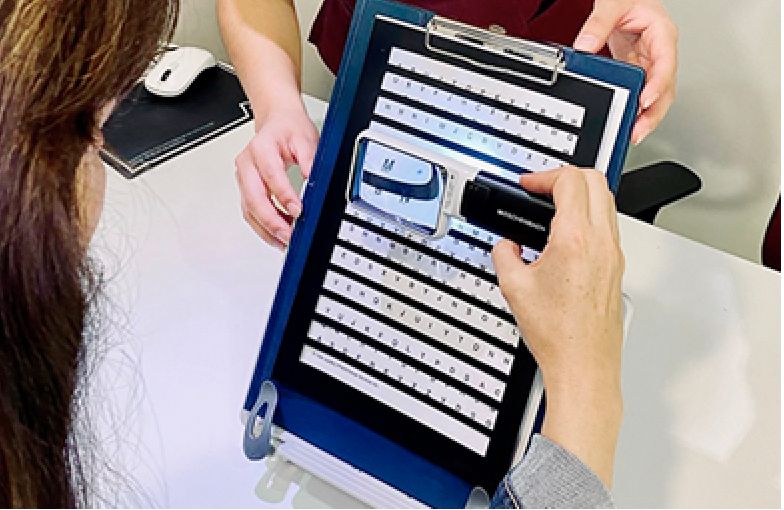
We assess not only how much a person sees, but how they use their vision to read, get around, find their way, work and carry out daily activities.

We recommend optical and non-optical aids, adaptations and techniques that support independence.

When to see us

  • Sees poorly even with glasses.
  • Has trouble reading, recognizing faces or getting around.
  • Has an eye disease that has permanently reduced their vision.
Read more

Recovery and vision rehabilitation

Adapting to visual changes after an illness, an injury or surgery.

We support recovery after surgery and functional adaptation to visual changes, with clear and measurable goals.

We coordinate with occupational therapists and rehabilitation teams, and involve the family or support network when appropriate.

When to see us

  • Visual changes after a stroke, an injury or surgery.
  • Loss of independence in activities they used to do easily.
  • The family or caregivers need guidance.
Read more

Second opinion and complex cases

We review the whole case, with previous tests, surgeries and treatments, and give you a clear plan. When needed, we coordinate with other subspecialists.

Preventive eye care and vision rehabilitation

Book an appointment (opens in a new tab)